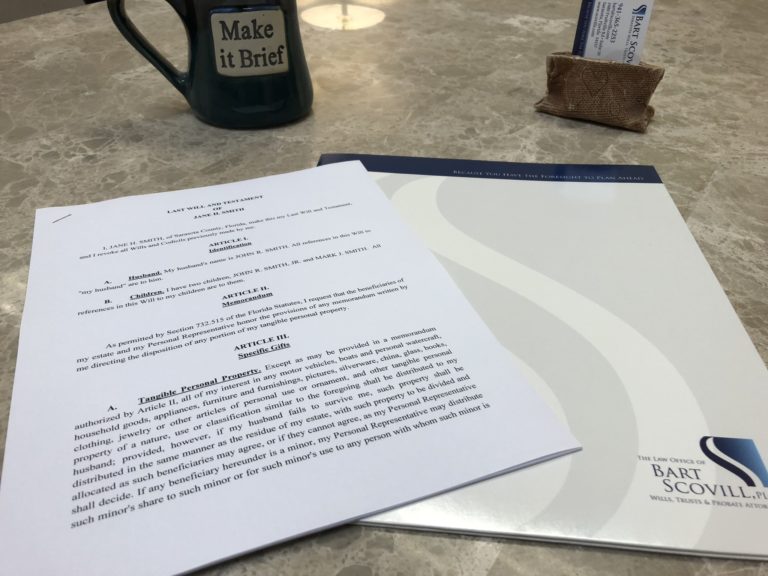
Is a Handwritten Will Valid in Florida? What You Need to Know Before Writing Your Own
This page is provided for general informational purposes only and does not constitute legal advice. Reading this content or contacting our office does not create an attorney-client relationship. Every legal situation is unique; consult a qualified Florida attorney regarding your individual circumstances.
It is a question that comes up more often than you might expect. Someone wants to get their affairs in order, sits down with a pen and paper, and writes out their wishes. Or they find a fill-in-the-blank form online, complete it in an afternoon, and consider the matter settled. The problem is that in Florida, neither approach is as legally reliable as most people assume. Understanding whether a handwritten will is valid in Florida, and what the real risks of DIY estate planning are, could be the most important thing you read before making a decision that affects your family.
Florida Does Not Recognize Holographic Wills
A holographic will is one written entirely by hand and signed by the person making it, without witnesses. Many states recognize holographic wills as valid under certain conditions. Florida does not.
Under Florida Statute Section 732.502, a valid will in Florida must be in writing, signed by the testator, and witnessed by two individuals who sign in the presence of the testator and each other. There is no exception for handwritten documents, no matter how clear the testator’s intentions are or how recently the document was written.
A handwritten will that does not meet these requirements will be denied admission to probate. Your family will be left with nothing, or with whatever Florida’s intestacy laws dictate, which may bear no resemblance to what you wanted.
What Happens When a Handwritten Will Is Rejected
Consider a scenario that plays out in Florida probate courts with some regularity. A Sarasota resident in their seventies writes a detailed letter by hand expressing exactly who should receive their home, their savings, and their personal belongings. They sign it, store it with their important papers, and never revisit the matter. After their death, the family brings the document to the probate court.
The court cannot admit it. Without two witnesses who signed properly, the document has no legal effect under Florida law. The estate passes instead under intestate succession, potentially to relatives the deceased had little relationship with, while the people they intended to benefit receive nothing.
The tragedy in these situations is not the absence of intention. It is the absence of the correct legal form.
The Real Risks of Online Will Forms
Online will platforms have become increasingly popular, and for simple estates in states with forgiving probate laws, they may work adequately. Florida is not one of those states.
The problems with online will forms in Florida fall into several consistent categories:
- Execution errors. The form may be completed correctly, but if the signing ceremony is not handled properly — witnesses signing at the wrong time, a notary substituted for a witness, or the testator not signing in the presence of both witnesses simultaneously — the will may be invalid.
- Florida-specific provisions are missing. Generic online forms are not tailored to Florida law. They often omit provisions relating to homestead property, the rights of a surviving spouse under Florida’s elective share statute, or language required for a self-proved will.
- Asset alignment is ignored. A will only controls assets that pass through probate. Online forms do not help you align beneficiary designations on retirement accounts, life insurance policies, and payable-on-death accounts with your overall plan. Misalignment between these documents is one of the most common and costly estate planning mistakes.
- Life changes are not accounted for. Online forms are static documents. They do not prompt you to update after a divorce, a remarriage, the birth of a grandchild, or the death of a named beneficiary. An outdated will can be nearly as problematic as no will at all.
Online Will vs. Attorney-Drafted Will: A Realistic Comparison
| Factor | Online Will Form | Attorney-Drafted Will |
|---|---|---|
| Florida-specific language | Rarely included | Always included |
| Execution guidance | Generic instructions | Supervised signing ceremony |
| Homestead provisions | Typically absent | Addressed specifically |
| Beneficiary designation review | Not included | Part of the planning process |
| Contestability risk | Higher | Lower |
| Ongoing review and updates | Up to you to initiate | Built into the relationship |
What a Valid Florida Will Actually Requires
To be admitted to probate in Florida, a will must meet the following requirements under Florida Statute Section 732.502:
- The will must be in writing
- The testator must sign at the end of the will, or direct another person to sign on their behalf in their presence
- Two witnesses must sign the will in the presence of the testator and in the presence of each other
Additionally, a self-proved will, one accompanied by a notarized affidavit from the testator and witnesses, simplifies the probate process significantly by eliminating the need to locate and depose witnesses after the testator’s death. Most attorney-drafted wills in Florida are self-proved as a matter of standard practice.
The Cost Argument Does Not Hold Up
The most common reason people turn to handwritten documents or online forms is cost. It is an understandable concern. But the comparison is not between the cost of an online form and the cost of an attorney. The real comparison is between the cost of proper planning now and the cost of probate litigation later.
A will that is successfully contested or rejected by the court can cost an estate tens of thousands of dollars in legal fees, take years to resolve, and permanently damage family relationships. The upfront investment in a properly drafted will is almost always a fraction of what a defective one ends up costing.
For a broader overview of what a complete estate plan looks like and how each document fits together, visit the estate planning services page. For a deeper look at the specific requirements and protections a properly drafted will provides, the last will and testament services page covers the key considerations in detail. You can also find plain-language video explanations of common Florida estate planning questions on the legal vlog page.
This article is part of the Florida estate planning services hub, which covers wills, trusts, powers of attorney, and the full range of planning documents available to Sarasota area families.
Frequently Asked Questions
Is a handwritten will valid in Florida?
No. Florida does not recognize holographic wills. A will written entirely by hand without two properly qualified witnesses who sign in the presence of the testator and each other has no legal effect under Florida law and will be denied admission to probate.
Can I use an online will service in Florida?
Online will forms can produce a document that meets Florida’s basic formal requirements if completed and executed correctly. However, they typically lack Florida-specific provisions, do not address homestead law or the elective share, and do not help you align your will with beneficiary designations on accounts and policies. The risk of an incomplete or misaligned plan is significant.
What makes a will easier to contest in Florida?
Wills that are more vulnerable to a successful contest share common characteristics: they were drafted without an attorney, signed without proper witnesses, changed shortly before death, or executed when the testator was in a weakened condition and dependent on a primary beneficiary. A properly drafted, witnessed, and notarized will that reflects consistent intentions over time is significantly harder to challenge.
What is the difference between a will and a trust in Florida?
A will takes effect at death and must pass through probate before assets are distributed. A revocable living trust takes effect during your lifetime, avoids probate entirely, and allows for a private and often faster transfer of assets. For many Florida residents, a trust is a more efficient planning vehicle than a will alone, particularly for those with real estate, business interests, or beneficiaries in multiple states.
If you have been putting off estate planning because you assumed a handwritten document or online form would be sufficient, now is the time to get a proper plan in place. Contact Bart Scovill, PLC to ensure your wishes will actually hold up when it matters most.
Schedule a Consultation The hiring of a lawyer is an important decision that should not be based solely upon advertisements. Before you decide, ask us to send you free written information about our qualifications and experience.
This blog post is for general informational purposes only and does not constitute legal advice. Reading this article or contacting our office does not create an attorney-client relationship. Every legal situation is unique; you should consult with a qualified attorney regarding your individual circumstances. Nothing in this article should be considered tax advice. Our office does not provide tax advice, and you should consult with a qualified tax professional before taking any action that may have tax consequences.
Contact Us For More Information
Or Call 941-365-2253 for a Free Consultation
NOTE: The use of the Internet or this form for communication with the firm does not establish an attorney-client relationship. Confidential or time-sensitive information should not be sent through this form.