Dying Without a Will in Florida: What Happens to Your Property
If you pass away without a valid will in Florida, the law decides who inherits your property. This process is known as intestate succession, and it can produce outcomes that may be very different from what you would have wanted, especially for blended families, unmarried partners, or individuals with minor children.
As an attorney focused on estate planning serving Sarasota, I’ve seen how the absence of a will can create confusion, stress, and even disputes among surviving loved ones. In this article, we’ll walk through how Florida intestate laws work and why it’s so important to document your wishes clearly.
What Is Intestate Succession?
When someone dies without a will, Florida’s intestate succession laws (Chapter 732, Florida Statutes) determine how their probate assets are distributed. Probate assets are those owned solely in the deceased person’s name with no designated beneficiary or joint owner.
Florida’s intestacy rules follow a strict order:
- Spouse and no children: The entire estate goes to the surviving spouse.
- Spouse and children from both spouses: The spouse still inherits 100%.
- Spouse and children from a previous relationship: Generally, the spouse receives half, and the remainder goes to the children, though Florida homestead and intestacy laws may alter this.
- Children, but no spouse: Everything is divided equally among the children.
- No spouse or children: The estate goes to parents, siblings, or more distant relatives.
If no heirs can be found, the estate may eventually escheat to the State of Florida, meaning the government receives it.
Learn more about formal probate administration in Florida
Common Surprises for Florida Families
Florida’s intestate succession system may appear straightforward, but it can lead to unexpected and often undesirable results:
1. Blended Families
Children from previous marriages may receive a share of the estate even if the decedent intended everything to go to their current spouse.
2. Unmarried Partners
Florida law does not recognize common-law marriages. If you die without a will, your long-term partner, no matter how close, may receive nothing.
3. Minor Children & Guardianship Issues
Without a designation of a pre-need guardian, the court must appoint someone to care for your minor children and manage any inheritance they receive. That person may not be who you would have chosen.
Why a Will (and More) Matters
A properly drafted Last Will and Testament does more than just name heirs, it gives you control over:
- Who manages your estate (the personal representative)
- Who becomes guardian of your minor children
- What happens to specific assets (including personal property)
- Charitable gifts or special bequests
For many clients, a will is just the start. Additional planning tools like revocable living trusts, beneficiary designations, and powers of attorney help ensure a smooth transition of assets and avoid unnecessary court involvement.
Real-World Example
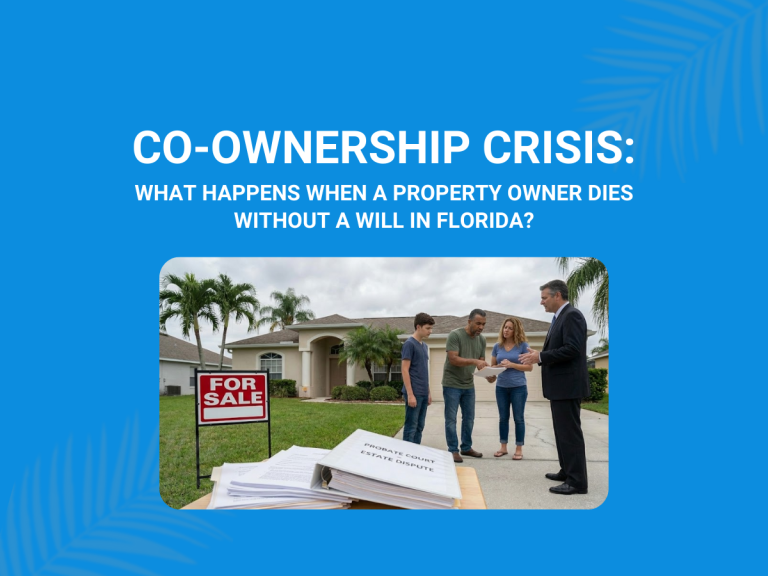
Consider this scenario: John, a Sarasota resident with two children from a previous marriage, passes away without a will. His second wife, Susan, expected to inherit the house they shared. Instead, under Florida law, Susan receives only half of the estate, including the house, while the other half passes to John’s adult children. The property cannot be sold or refinanced without involving them, and tensions rise as a result.
This kind of outcome can be avoided with simple, proactive planning.
Take the First Step
Florida’s intestacy laws don’t take into account your relationships, values, or long-term wishes. The best way to protect your loved ones is to make your plans legally binding.
Start by scheduling a consultation to discuss how a will or trust can protect your family, your assets, and your intentions.
Contact the office of Bart Scovill, PLC today
Don’t leave it up to the courts; make your wishes legally binding.
This blog post is for general informational purposes only and does not constitute legal advice. Reading this article or contacting our office does not create an attorney-client relationship. Every legal situation is unique; you should consult with a qualified attorney regarding your individual circumstances. Nothing in this article should be considered tax advice. Our office does not provide tax advice, and you should consult with a qualified tax professional before taking any action that may have tax consequences.
Contact Us For More Information
Or Call 941-365-2253 for a Free Consultation
NOTE: The use of the Internet or this form for communication with the firm does not establish an attorney-client relationship. Confidential or time-sensitive information should not be sent through this form.