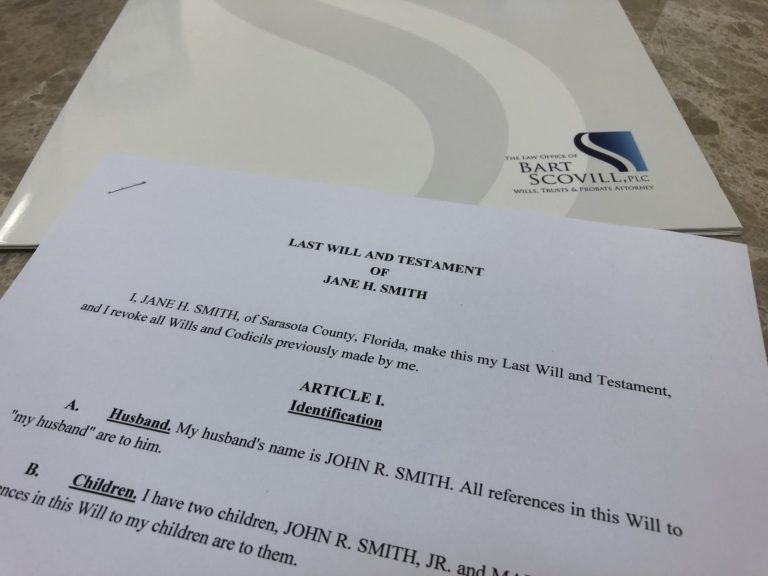
How to Avoid Probate Court If you’ve ever heard of probate court, the chances are good that what you heard wasn’t reassuring. We’d all like to give our possessions to our children or loved ones when we pass on. We are careful to have life insurance and savings in order to make things easier for those we care about when we’re gone. The last thing that anyone wants is for their loved ones to wait months, or longer, for their inheritance or to have a large portion of it taken in probate fees. There are however, some steps that can be taken to avoid probate court. Make a Living Trust This is one of the most straightforward ways to avoid probate court. As an alternative to a will, a living trust places all property and assets in “trust” where they are managed by a chosen trustee. This benefits your chosen beneficiaries and avoids probate because all of your assets and property have already been distributed. Designate Beneficiaries on Bank and Retirement Accounts If you’ve chosen to have a will rather than a trust, you can still ensure that not all of your assets need to pass through probate court. Many people are unaware that you can often designate beneficiaries for some of your most valued assets. Assets such as your retirement and bank accounts often allow you to designate a beneficiary who will receive the money upon your death. Joint Holdings Another good way to ensure that your real estate stays out of probate court is to hold it jointly with the person you want to have it. Owning property jointly allows it to pass directly to your loved one without involving probate courts. There are risks in owning property jointly with anyone other than a spouse, but either way jointly held property goes to the surviving owner upon your death. There are many other ways to avoid probate court and ensure that your assets aren’t mired in red tape indefinitely. Talk to an estate attorney to discuss ways in which you can avoid probate and minimize stress in what will already be a difficult time for your loved ones. For a free consultation, please call us today at 941-365-2253.
Contact Us For More Information
Or Call 941-365-2253 for a Free Consultation
NOTE: The use of the Internet or this form for communication with the firm does not establish an attorney-client relationship. Confidential or time-sensitive information should not be sent through this form.
Is a Simple Will in Venice Right for You? Simple wills are for uncomplicated estates and they allow your assets to be given outright to those named. One advantage to such a will is that if you change your mind about how your assets are to be distributed or your assets change, you can revoke…
Blended families, which involve remarriage and the combining of two families, have become increasingly common in Florida and the rest of the United States. While blending families can bring joy and new opportunities, it can also complicate estate planning. Without careful planning, blended families may face challenges when it comes to distributing assets and ensuring…
Life is constantly changing, and your estate plan should reflect those changes. Major life events, such as marriage, divorce, the birth of a child, or the death of a loved one, can have significant impacts on your estate plan. Here’s why it’s essential to review and update your estate plan after these key life events…
Do you need an estate planning attorney in Sarasota? Sometimes people make the mistake of only thinking about planning for their estate until late in life. However, no one should have to worry about what happens to their loved ones if something tragic should happen. It is wise and responsible to take steps to work…
When most people think of estate planning, their minds go to wills, trusts, and financial inheritances. But one of the most critical elements of any comprehensive plan—especially in Florida—is making sure someone can speak on your behalf during a medical emergency. That’s where a health care surrogate comes in. Whether you’re facing a serious diagnosis,…
Power of Attorney in Bradenton Made Simple Adults whose parents are aging might have concerns about whether their elderly family members are capable of handling their personal and financial affairs. Even parents who maintain complete mental clarity may be dealing with physical challenges that limit them. Unfortunately, responsibilities do not go away when someone ages….