Snowbird Estate Planning: What Part-Year Florida Residents Must Address Before Heading North
An estate planning attorney in Sarasota sees a predictable surge of questions every October, right as the area’s seasonal residents begin preparing to head back north for the winter. Before you close up the house and start the drive or flight back, several Florida-specific items need to be in order, not because Florida requires it as a condition of leaving, but because an incomplete Florida domicile creates real legal and tax exposure back in your home state. As an estate planning attorney serving Sarasota, Lakewood Ranch, and the surrounding snowbird communities, I spend this time of year helping part-year residents confirm that their Florida status will actually hold up if their prior state ever questions it.
What Snowbirds Must Have in Order Before Leaving Florida
A complete snowbird estate plan in Florida should address four things before heading north each year:
- A filed Florida Declaration of Domicile. This document, filed with the circuit court under Florida Statute Section 222.17, is the single clearest piece of evidence that Florida is your permanent legal home rather than a seasonal residence. Without it, a prior state’s tax authority has an easier time arguing that your true domicile never changed.
- Estate documents updated to reflect Florida law. A will, trust, power of attorney, or health care directive drafted under a prior state’s law is not automatically invalid in Florida, but a document that was never reviewed for Florida’s execution and terminology requirements can create complications precisely when a family needs it to work smoothly.
- A current homestead exemption application. If your Florida home is your permanent residence, the homestead exemption must be filed with the county property appraiser by March 1 of the tax year. Missing this deadline, or never applying because the home was purchased mid-year, generally means waiting until the following year.
- A coordinated plan for your prior-state tax authority. Simply owning a Florida home and spending part of the year here is not, by itself, enough to sever tax residency in a state that still considers you a resident. Each prior state has its own residency test, often based on days spent in the state and where your closest personal and economic ties remain.
The Legal Risks of an Incomplete Domicile Change
Florida has no state income tax and no estate tax, which is exactly why states with both are motivated to keep testing whether a departing resident’s domicile change was real. Establishing genuine Florida domicile protects snowbirds against three risks that come up repeatedly:
- Prior-state income tax exposure. New York, California, and Massachusetts are three of the most aggressive states in the country when it comes to residency audits, and each uses detailed day-count and “closest connections” tests to determine whether a taxpayer who claims Florida domicile actually severed their prior-state tax residency. A state audit can look at where you are registered to vote, where your car is registered, where your doctors are located, and even utility and credit card records showing where you were on specific days.
- Estate or inheritance tax exposure. A prior state that successfully argues you remained domiciled there at death can subject your entire estate, not just property located in that state, to that state’s estate or inheritance tax, even though Florida imposes neither.
- A prior-state court asserting jurisdiction over Florida assets. If your domicile is genuinely disputed, a prior-state court may attempt to assert jurisdiction over your estate, including assets held in Florida, creating a more complicated and expensive probate or trust dispute than a properly documented Florida domicile would have allowed.
The following is a composite illustration for general educational purposes. It does not describe an actual client matter and is not a representation of results.
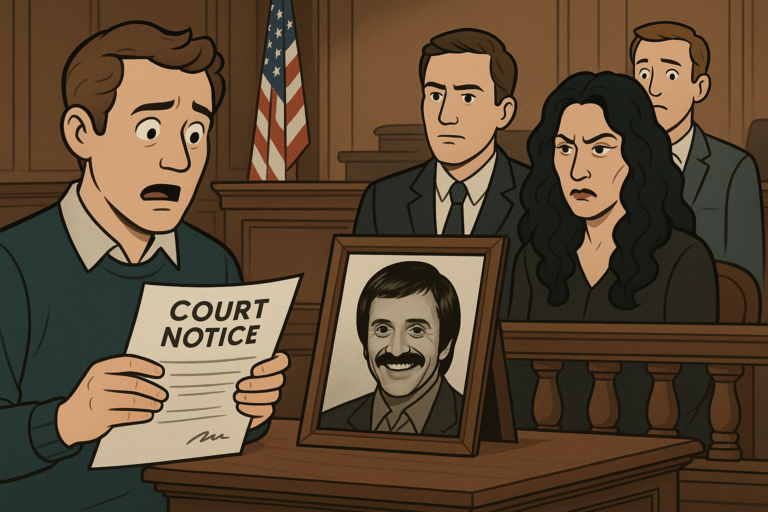
Consider a Lakewood Ranch couple who spends roughly eight months of the year in Florida and keeps a New York apartment they have owned for decades, visiting for about four months. Because they spend well under New York’s 184-day threshold for statutory residency there, New York cannot treat them as a statutory resident regardless of domicile, which means the real question in any dispute is where they were actually domiciled. The couple votes in Florida and considers it their true home, but they never filed a Declaration of Domicile, kept their New York driver’s licenses out of habit, and continued seeing their longtime New York physicians. When New York’s tax authority questioned their claimed change of domicile after a large capital gain triggered a residency audit, the couple had little documentary evidence beyond their own testimony that Florida, and not New York, was their permanent home. The audit took months to resolve and required reconstructing years of records that a filed Declaration of Domicile, Florida-issued licenses, and local Florida providers would have established from the start.
Estate Planning Documents Every Florida Snowbird Needs Updated
Beyond domicile paperwork, four estate planning documents deserve a specific Florida review, especially if they were originally drafted in a prior state:
- Will or trust. Florida generally recognizes a will validly executed in another state, but Florida-specific issues, such as who may serve as personal representative and how homestead property must be addressed, are often overlooked in an out-of-state document.
- Durable power of attorney. Florida Statute Chapter 709 sets specific requirements for a durable power of attorney to be effective in Florida, and financial institutions in Florida are often more comfortable honoring a Florida-form power of attorney than an unfamiliar out-of-state one.
- Health care surrogate designation. Florida uses the term health care surrogate rather than health care proxy or health care agent, and Florida hospitals and providers are most familiar with the state’s own form during an emergency.
- Living will. Florida’s living will form addresses end-of-life decisions under Florida law specifically, and a snowbird who splits time between two states benefits from having both a Florida-compliant living will and a version that satisfies the prior state’s requirements.
For a full overview of Florida estate planning options, visit the Florida estate planning services hub. Snowbirds who want their Florida assets to pass privately and avoid probate in two states can review how a revocable living trust is structured, and a properly executed last will and testament remains the foundation even for part-year residents.
Frequently Asked Questions
Do I need to file a Florida Declaration of Domicile every year as a snowbird?
No. A Declaration of Domicile is generally a one-time filing that establishes Florida as your permanent legal residence going forward, not an annual renewal. However, your conduct after filing it matters; continuing to vote in a prior state, keeping a prior-state driver’s license, or spending more time in your former home state than in Florida can undermine the domicile you declared.
Can I keep my homestead exemption if I spend part of the year in another state?
Yes, as long as the Florida property remains your permanent residence and you do not claim a similar residency-based tax benefit on a home in another state. Florida law does not require year-round physical presence to maintain a homestead exemption, but claiming a homestead-type exemption on a property in another state at the same time can disqualify the Florida exemption entirely.
Which states are most aggressive about auditing departing residents?
New York, California, and Massachusetts are consistently among the most active states in auditing taxpayers who claim to have become Florida residents, often using detailed day-count tracking and a review of where a person’s closest personal and financial ties remain. A taxpayer who spends significant time in a former home state, keeps professional licenses or memberships there, or fails to update basic records such as a driver’s license and voter registration is more likely to face a residency challenge.
Is an out-of-state will still valid if I’ve established Florida domicile?
Generally, yes. Florida recognizes a will that was validly executed under the law of the state where it was signed, regardless of your current domicile. However, valid is not the same as complete: a Florida domicile change is a good time to have the document reviewed for Florida-specific issues, such as personal representative qualifications and homestead property, that the original document was never written to address.
If you split your time between Florida and another state and want to confirm your domicile and estate documents will hold up if questioned, contact Bart Scovill, PLC to schedule a consultation before you head north this year.
Schedule a ConsultationThe hiring of a lawyer is an important decision that should not be based solely upon advertisements. Before you decide, ask us to send you free written information about our qualifications and experience. This blog post is for general informational purposes only and does not constitute legal advice. Reading this article or contacting our office does not create an attorney-client relationship. Every legal situation is unique; you should consult with a qualified attorney regarding your individual circumstances. Nothing in this article should be considered tax advice. Our office does not provide tax advice, and you should consult with a qualified tax professional before taking any action that may have tax consequences.
Contact Us For More Information

Or Call 941-365-2253 for a Free Consultation
NOTE: The use of the Internet or this form for communication with the firm does not establish an attorney-client relationship. Confidential or time-sensitive information should not be sent through this form.